
According to the technical director of the Szeklerland Football Academy, the past season was an important stage in the institution’s development.
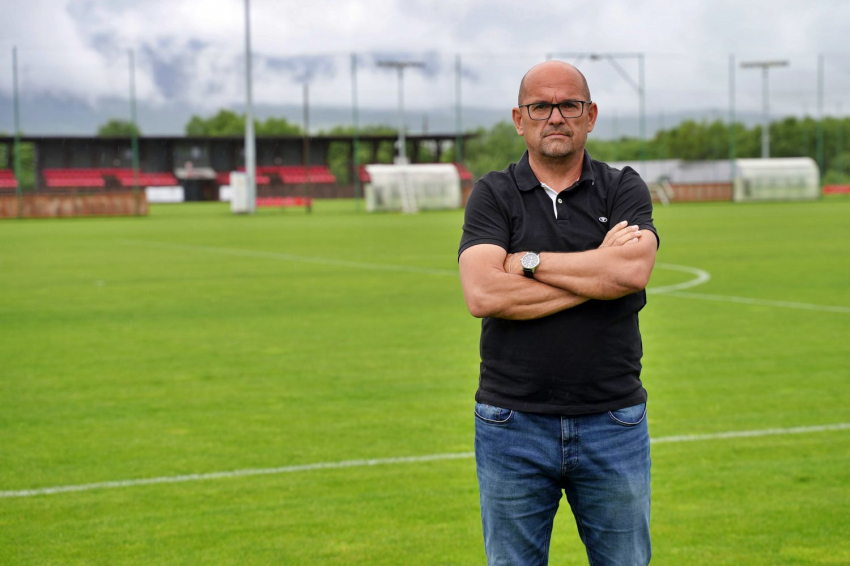
According to the technical director of the Szeklerland Football Academy, the past season was an important stage in the institution’s development. We spoke with Dusinszki Zoltán about the results of the youth teams, individual training, the progress of the girls’ section, the senior women’s team’s European qualification, and the path that can lead from the academy to the SuperLiga.
– As technical director, how do you assess the season just gone for FK Csíkszereda and the Szeklerland Football Academy as a whole, in terms of the results and development indicators of the academy age groups?
– The 2025–2026 season was of historic importance for us as a club, as FK Csíkszereda played in the top tier of Romanian football for the first time in its history. At the start of the season, staying up was naturally the main objective, but the team also proved that it can be not only a participant, but a competitive side in the SuperLiga. From the academy’s point of view, this season was also an important milestone. All our age groups worked in line with the club’s professional philosophy, which continues to focus on player development, competitiveness and preparation for senior football. For us, it is not only the result that matters, but also the path our players take, how they develop, and how much closer they get to the level they will need in senior football.
– Which age groups would you highlight in particular, and where do you feel that, based on the results or the players’ development, there could have been more in this season?
– Our academy teams once again competed in the strongest youth championships in the country, and all four of our age groups reached the Liga Elitelor play-offs. That in itself is an important sign that we are on the right track. Looking at the results, there may be a slight sense of disappointment with our U16 team, as they did not manage to finish in the top half of the table. The other age groups, however, finished among the top four: our U15 and U17 teams came fourth, while our U18 team in the Liga de Tineret ended the season with a bronze medal. At the same time, it is just as important that several of our players made significant individual progress. More and more of them are coming into the sights of the national youth teams or moving closer to senior football, and for us that is at least as valuable as a good league finish.
– What results has individual training brought at academy level, and in which areas is the impact of this work most visible?
– One of the important professional innovations of the season was the launch of the Talent 25 programme. It is aimed at players in whom we see outstanding development potential. Twenty-five players from the academy age groups were given the opportunity to take part in personalised training alongside their team sessions. The aim of the programme is to make their technical, tactical and mental development even more conscious. We want to speed up the process that leads to higher-level performance. We held separate sessions every week, most of them position-specific. Defenders and forwards worked in separate groups, so we could adapt much better to the requirements of each position. I see the biggest progress in technical details, decision-making and recognising game situations. These are areas that can be decisive in modern football.
– How is the work currently going in the pre-academy age groups, and how well are you managing to ensure the transition from the younger groups towards academy training?
– In the pre-academy age groups, the most important thing is to work along a unified professional direction. The common training plans and professional principles help ensure that children receive, from an early age, a type of training that will later fit into the academy system. We also see that the county championship alone is not sufficient for proper development. That is why we take our teams to several international tournaments, because those matches provide a much greater challenge and show more clearly where the children stand. We supplement the weekly training work with talent development sessions, mainly focused on technical training. In the U13 and U14 age groups, we already have selected players from outside the club in the squad. This is where we truly begin to build the academy teams of the future.
– The senior women’s team won the silver medal and secured European qualification, but the league title and the cup did not come. From the perspective of the technical director, do you see this season more as a step forward or as a missed opportunity?
– The senior women’s team started the season with a completely new staff and big plans. We have to speak about this honestly: we did not manage to achieve our original objectives. The league title and winning the cup were among our goals, but they were not achieved. At the same time, qualifying for international competition in the last home match is a historic achievement: for the first time, a senior team from Csíkszereda will play on the international stage.
– Where does the senior women’s team need to improve in order to be competitive next season both in domestic competitions and internationally?
– I think that, in the recent period, a lack of confidence has often caused the biggest problems. In several matches we created chances, but we could not turn them into goals, and because of that we were unable to decide games. The wave of injuries also seriously affected the team selection. We could not always line up in our strongest formation, and in such a tight field that counts for a lot. Before next season, the squad may need to be refreshed, especially in the attacking department.
– The senior women’s team is preparing for European competition. What changes can be expected in the squad and the technical staff, and what criteria will guide the building of next season’s team?
– The technical staff will change completely, but I do not want to give names for now, until the coaches have signed their agreements. As soon as these become official, we will of course communicate them. There will also be changes in the playing squad. We have several departures, and we are working to replace them with quality players, and even to strengthen the squad where possible. We should return to the names on another occasion.
– How do you assess the situation of the girls’ youth age groups, and how visible is the process of building a real base of home-grown players behind the senior women’s team?
– Our girls’ youth section has developed a lot recently. Next season we will be able to enter a team in every age group, which is a major step forward. In addition to the local girls, we have also managed to select several talented young players from the regional centre system and build competitive teams. In the 2025–2026 season, the oldest group went all the way to the semi-finals, where unfortunately they lost to U Olimpia Cluj. Our U15 team will play in the Final Four next week. These are very important experiences for the players. What is especially pleasing is that there are several girls in these teams in whom we see serious potential. If their development continues at the right pace, they could soon become key members of the senior team as well. That is the real goal: for the senior women’s team to have an increasingly strong home-grown base behind it.
– The men’s SuperLiga team is preparing for next season with a new coaching staff. How do you see the possibilities for cooperation between the academy and the first team in this new professional situation?
– I think that even this season the relationship between the academy and the first team started moving in a good direction. Several young academy players were able to make their SuperLiga debuts, which was a very important step. However, we also have to see that the transition to senior football is very difficult. In order for these players not only to make their debut, but also to receive more minutes, much more energy needs to be invested in the process. It does not happen by itself. If the first-team staff and the academy can jointly develop a suitable strategy, then hopefully more and more home-grown players will receive real opportunities in the senior team.
– In the coming seasons, how many former or current academy players do you realistically see in the starting eleven or in the core squad of the men’s senior team, and what is needed for them to become stable SuperLiga players?
– Seven academy players will start pre-season with the senior squad. This is a big opportunity for them, as they can show their qualities and convince the coaching staff that they deserve to stay in the squad and then be integrated step by step into senior football. It is very difficult to say exactly what is needed for someone to become a stable SuperLiga player, because it depends on many factors. You need a coach who trusts you, perseverance even when you receive fewer minutes, and hard, consistent work in training. Talent alone is not enough. Without the work put in, nobody can remain at a high level in the long term.
– How do you see the academy’s next few years from a financial, organisational and professional point of view? In which areas is stability or development most needed?
– I believe all the conditions are in place for the academy teams to work properly. The staffs have grown together over the past year and have done a good job. Our selection system also works well through the regional centres, and for positions where we have shortages, we try to find Hungarian talents from Transylvania with the help of our scouting system. The professional foundations are clear. What we need now is to continue working consistently. If we can do that, then in the coming years it can be a realistic goal to fight for national titles in several age groups.
– How is preparation for next season going at the academy, and can any changes be expected in the technical staffs, training directions or day-to-day organisation?
– The technical staffs will be set up similarly to last season. We did not see any point in making personnel changes, because in my opinion our coaches worked well. We will begin preparations on 6 July, and we will have five weeks until the start of the championship. During this period, every age group will take part in an international tournament and a one-week training camp. These are important because this is when the playing relationships can really develop, and when teams can make significant progress as a group. We want to use the summer period even more efficiently through individual training and by increasing the number of training sessions. The aim is for the players to arrive in suitable physical condition for the start of the championship, which will be on 8–9 August.
– What would you consider a successful next season from the point of view of the academy age groups, the women’s section and the relationship with the men’s senior team?
– The task for next season is clear: we must further increase the effectiveness of the players’ individual development, bring even more home-grown footballers close to senior football, and continue to strengthen our academy’s national reputation through our results.
Interview by: Rédai Attila